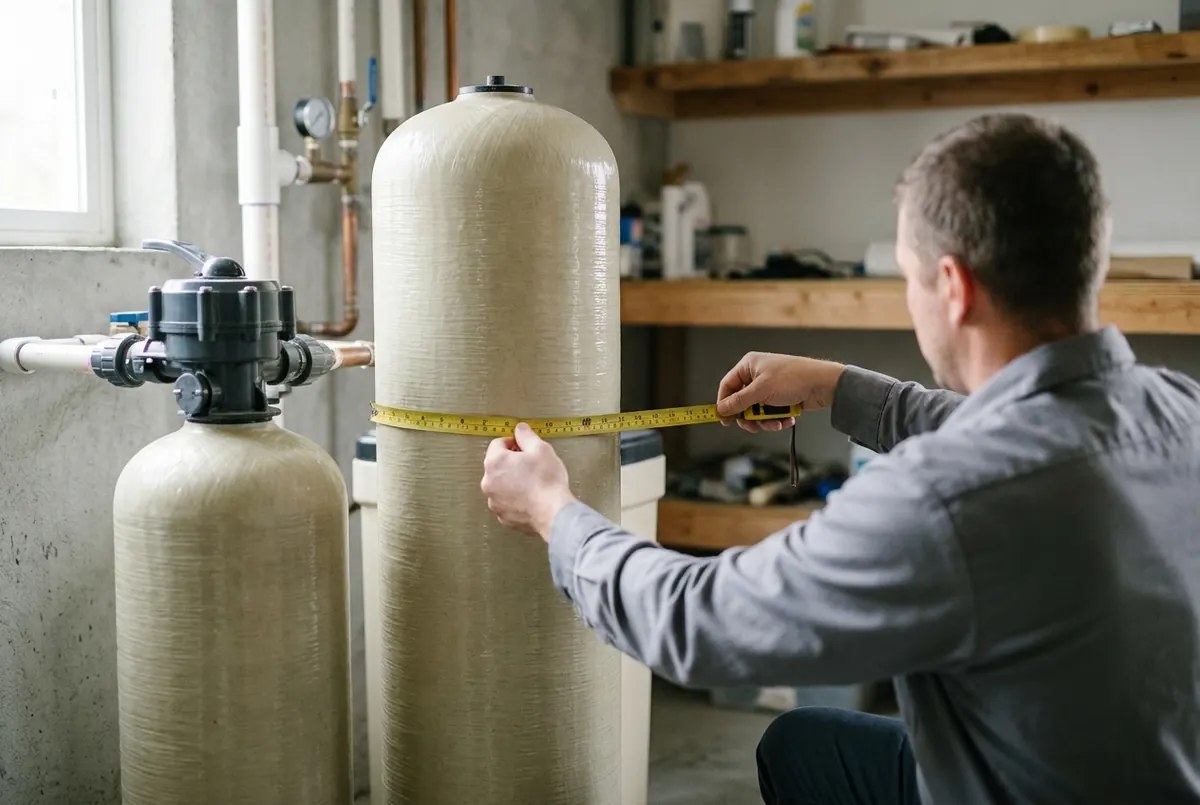

Importantly, a water softener system for home differs from a commercial softener not only in physical scale but also in operating expectations and duty cycles. Commercial systems are engineered for high or continuous flow, extended runtime, faster regeneration, and industrial uptime requirements. These characteristics make them unsuitable for most residential settings due to size, infrastructure needs, salt and water consumption, electrical requirements, and installation constraints that exceed standard household plumbing and space allowances. A water softener system for home, by contrast, is designed around typical household demand patterns, intermittent flow, and predictable peak usage, making them more practical and cost-efficient for the home environment.
Water hardness levels vary significantly between regions and between city water and private well water sources, meaning there is no single softening approach appropriate for every home. The optimal outcome comes from aligning the softening strategy with the home’s water chemistry, plumbing layout, and demand profile. Evaluating factors such as capacity, flow rate, regeneration method, salt usage, and installation constraints contributes to more consistent long-term performance and effective scale reduction on plumbing systems, fixtures, and water-using appliances.
↳ For official Canadian drinking water standards and treatment guidelines, visit www.canada.ca/health-canada...
Why purchase a home water softener?
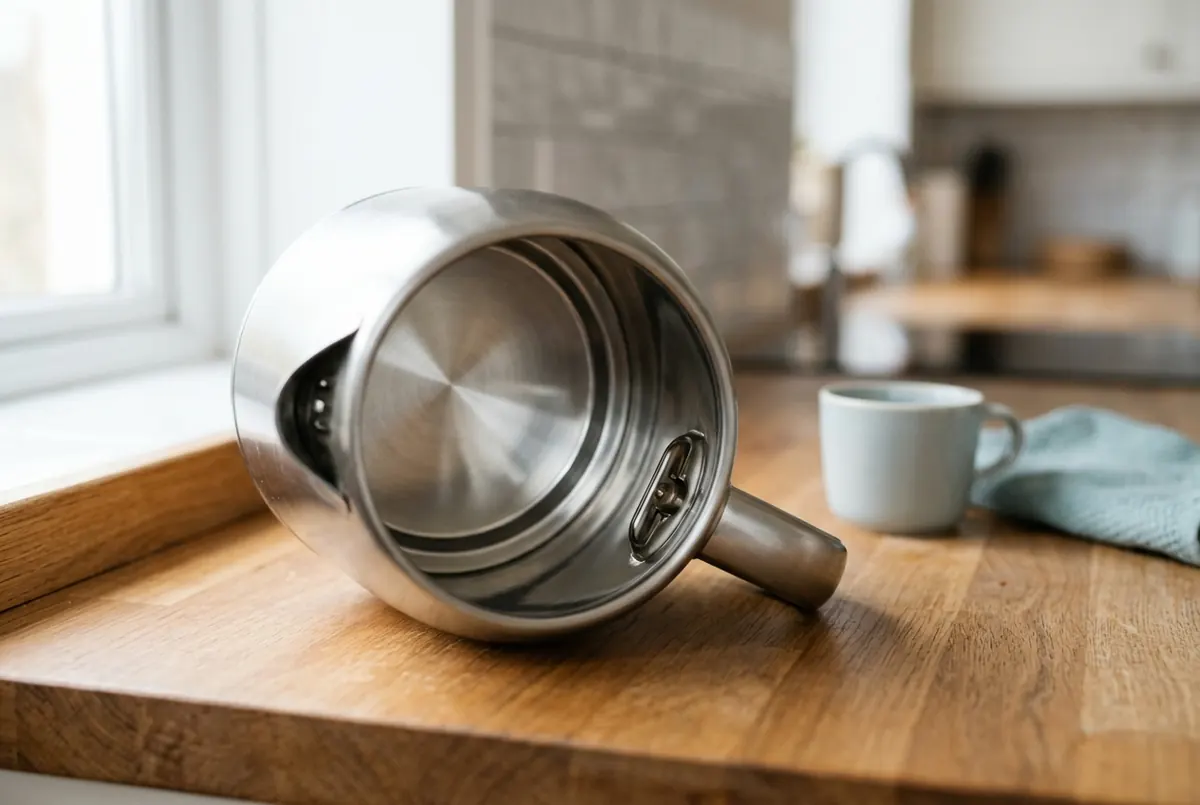
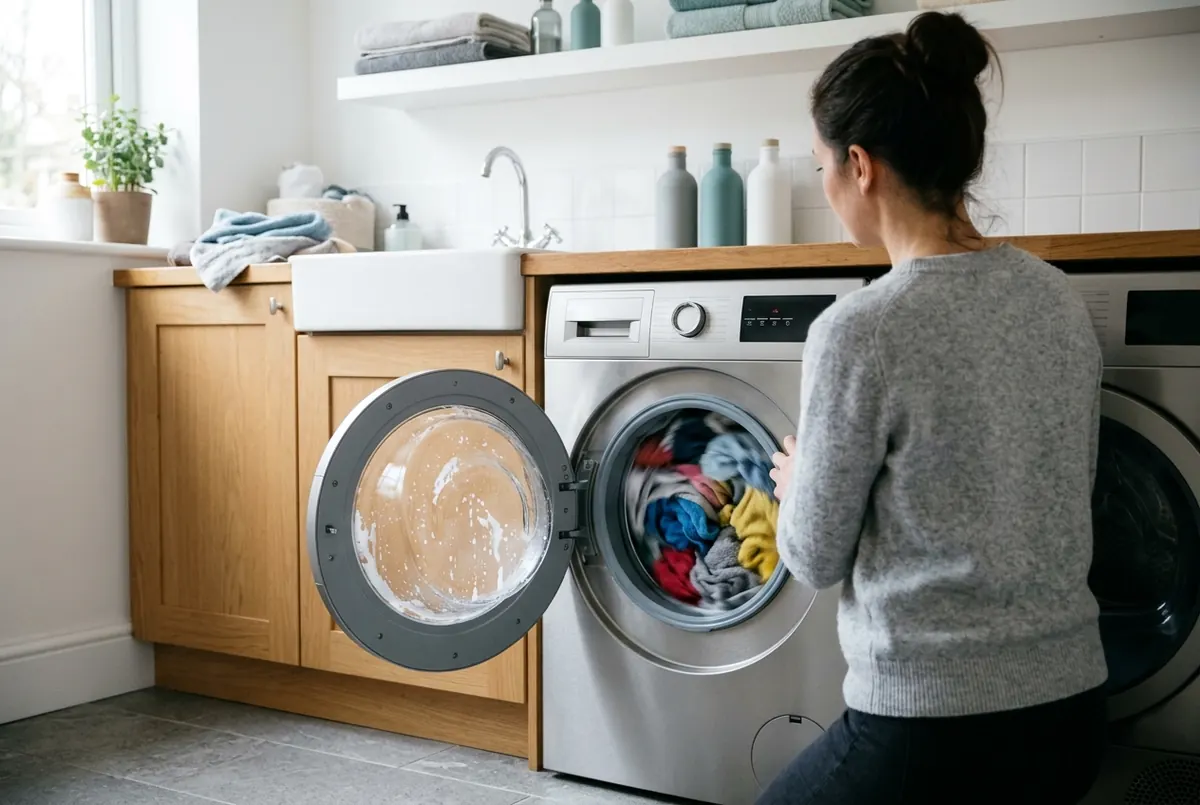
Home water softeners play a critical role in managing water hardness across residential environments in North America. In both municipal and well contexts, hardness minerals like calcium and magnesium accumulate inside tankless water heaters, boilers, plumbing fixtures, and household appliances—driving higher energy consumption, scaling issues, reduced performance, and costly premature failure. In the last 20 years in the water treatment industry, we’ve seen that the lifetime cost of scale damage often exceeds the cost of properly sizing and installing a home water softener, which is why softening is widely considered a standard protection measure. Understanding how a water softener system for home functions, the different types, and where they provide the greatest benefit establishes the foundation for selecting the right system for long-term residential performance.
What Makes a Water softener system for home?
When you’re buying a home water softener, the goal isn’t just “get rid of hardness.” You want a system that’s correctly sized for your household demand, efficient with salt, compatible with your plumbing, and built from professional-grade components—so it quietly performs for years without becoming a service or operating-cost burden. Commercial softeners are sometimes mistaken for an upgrade, but they’re engineered for industrial flow rates, oversized service connections, and heavy, continuous demand profiles that don’t exist in residential settings. In a home, these systems are physically oversized, regenerate inefficiently, waste salt and water, and rarely reach the minimum flow rates needed for proper ion exchange. The result is a system that costs more to purchase and install while delivering poorer performance than a properly configured home water softener. With those realities in mind, it’s worth breaking down the key considerations that determine which home water softener will actually perform well in a residential setting and how you can determine which water softener system for home is best for your specific situation.
1. The right size: measured in resin
Most softeners are advertised as 32,000 / 48,000 / 64,000 grain systems — but those big grain numbers only show up if you burn through a huge amount of salt per regeneration.
For a home, the meaningful way to look at size is:
- Cubic feet of resin (0.75, 1.0, 1.5, 2.0 cu.ft. are the core residential sizes)
- Not the inflated “grain” label that’s been pushed by marketing
When you size by resin volume, you’re looking at how the softener is actually built, not at a number that can be manipulated by cranking up the salt dose.
2. Engineered for efficiency
For homeowners, salt efficiency is everything: it decides how often you buy bags, how often you fill the brine tank, and how much salt goes down the drain.
That’s why the key performance number is theSoftener Efficiency Rating (SER) – grains of hardness removed per pound of salt.
For home use, look for:
- SER in the range of 3,333 – 5,000 grains per pound
- A retailer who can actually show you the SER for the setup they’re recommending
Higher SER = less salt, less hassle, and lower lifetime cost.
3. Built for your home’s flow
Water softening isn’t instant – the water has to spend enough time in the resin bed to fully soften. A home-appropriate system must keep up with your peak flow demands.
Instead of focusing on the control valve’s “maximum GPM,” look at Service Flow Rate (SFR) tied to resin volume:
- 1.0 cu.ft. of resin → about 5 GPM of perfectly softened water
- 1.5 cu.ft. → about 7.5 GPM
- 2.0 cu.ft. → about 10 GPM
For almost all homes, anything smaller than 1.0 cu.ft. is under-sized; the SFR is usually too low to reliably run a house.
Match SFR to:
- Your main line size (½", ¾", 1")
- How many fixtures may run at once (showers, laundry, dishwasher, etc.)
4. Smart regeneration
How and when a softener regenerates is a big part of whether it’s a good fit for real life in a home.
- Metered (on-demand) systems measure water use and regenerate only when capacity is actually used
- Time-clock systems regenerate on a fixed schedule whether they need to or not
For residential use, on-demand is the clear winner:
- Uses far less salt
- Adapts to changing household patterns (holidays, guests, vacations)
- Keeps softened water available without wasted cycles
Time-clock systems are essentially legacy tech that only make sense in rare, very specific situations.
5. Professional-grade components
A home-appropriate softener is built from professional-grade parts, not disposable consumer hardware.
Control valves
Look for systems built around proven professional valves such as: Fleck, Clack and Autotrol.
These are widely used in the trade because they’re:
- Rugged and long-lived
- Designed to be repaired, not thrown away
- Supported with parts and documentation
- Backed by serious warranties (5+ years on the valve is a solid benchmark)
The valve is the “brain and moving parts” of the softener — choosing a professional-grade valve is one of the most important decisions in getting a home-appropriate system.
Resin quality
Resin does the actual softening work and has a huge impact on system performance, efficiency and lifespan.
Two softeners can use the same valve but completely different resin quality. A home-appropriate softener uses resin chosen and installed by someone who knows what they’re doing, not whatever was cheapest that day.
6. Matched to your plumbing
The system should be sized to your main line diameter:
- ½", ¾", or 1" inside diameter for most homes
A good rule of thumb:
- Choose a control valve whose internal port size matches your main line (e.g., ¾" line → ¾" valve porting)
Oversizing valve porting far beyond your pipe size just wastes money; the plumbing becomes the limiting factor anyway.
Because residential water conditions vary, different home water softener configurations are better suited to different scenarios. The categories below can be explored to browse compatible water softener systems for home and learn more about application-specific considerations.
For High Iron
For Whole House
Types of home water softeners and their purposes
Although the term "home water softener" is typically associated with whole-home ion-exchange systems, homeowners actually rely on a spectrum of softening solutions depending on water chemistry, demand, installation constraints, and appliance protection needs.

1. Whole-home ion exchange softeners (traditional softening)
Primary Purpose: Treats all incoming water to prevent scale buildup throughout the home.
How it works: Exchanges hardness ions (calcium and magnesium) for sodium or potassium using a charged resin bed.
Best for:
- Municipal or well water with moderate to high hardness
- Protecting plumbing, fixtures, and major appliances (dishwashers, tankless heaters, boilers)
- Improving soap efficiency and reducing spotting/streaking
This is the most effective and widely accepted method of true softening because it chemically removes hardness, versus merely inhibiting it.

2. Dual-tank or twin-alternating softener systems
Primary Purpose: A twin-tank softener provides uninterrupted softened water under heavy or continuous demand.
How it works: Two resin tanks operate alternately so one can regenerate while the other supplies soft water.
Best for:
- Larger homes with multiple bathrooms
- Households with high or unpredictable water usage
- Homes with tankless water heaters, recirculation loops, or boiler-fed systems
This approach borrows from commercial engineering but is highly beneficial in certain residential scenarios.
3. Point-of-use water softeners (localized protection)
Primary Purpose: Targets hardness reduction at a specific appliance rather than the entire home.
Common applications:
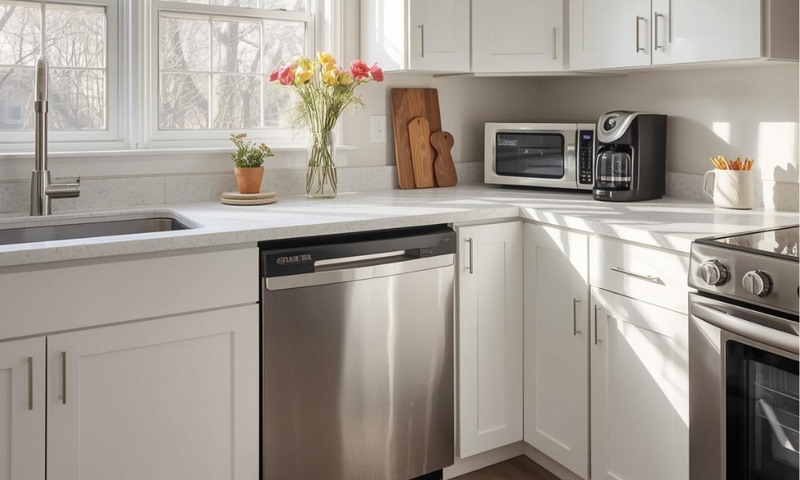
- Dishwashers
- Laundry appliances
- Ice makers
- Coffee machines / espresso systems
Best For:
- Short term renters with appliance concerns
These systems are not intended to replace whole-home softening, but they providelocalized scale controlwhen whole-home installation is not feasible or not required.
Home water softener decision making process
Step 1
Consider the type of system needed. (whole house, point of use, etc.)
Step 2
Size the system for your home. (water usage, flow rate, etc.
Step 3
Select a reliable brand & model. (think reputation, quality components, etc.)
↳ For more detailed information on selecting a water softener system for home, download our Ultimate Water Softener Selection Guide.
Ultimately, selecting an appropriate home water softener depends on matching the system type to the home’s water chemistry (municipal vs. well), demand profile (flow and volume), installation constraints (space and plumbing), and performance expectations. Proper alignment of these factors supports reliable operation and helps ensure the system meets the household’s softening needs over the long term.
For many households, this alignment leads to the use of a whole-home ion-exchange softening system when the objective is to reduce limescale throughout the entire plumbing network and protect fixtures, tankless heaters, and water-using appliances. Commonly referred to aswhole house water softeners, these systems represent the most conventional point-of-entry approach for treating hardness at the scale of the entire home.
↳ Unsure which water softener system for home aligns with your water conditions and improvement goals? Our certified water treatment specialists handle these inquiries every day and would be happy to help. Contact us and we’ll guide you to the right solution!
Aquatell: Authority built through experience & continuous excellence
Consumers look to Aquatell for guidance that is technically sound, well-informed, and based on real-world experience. These principles shape the way we support homeowners, contractors, and organizations:
North America-wide Perspective
We sell to & support homeowners across Canada and the U.S., giving us direct exposure to diverse water conditions, regulatory environments, and treatment standards.
Research & knowledge-driven approach
Our guidance draws on ongoing independent research, verified water data, and a growing understanding of changing & diverse water conditions across North America.
Expert human technical guidance
We ensure every customer speaks with real water treatment specialists who have a deep understanding of water chemistry, sizing, practical application, and the best products in the industry.
Two decades of real-world experience
For more than 20 years, we’ve helped residential customers and commercial organizations evaluate water chemistry, ensure system compatibility, and navigate specialized use cases across North America.
Frequently asked questions - Water softener system for home
Are "home water softeners" the same as "whole-house water softeners"?
Not necessarily. A “home water softener” is a broad category that includes any softening solution used within a residence. A whole-house water softener refers specifically to a point-of-entry (POE) system that treats the entire home’s water supply before it distributes to fixtures, appliances, and plumbing. Homes may also use point-of-use (POU) softeners for specific applications such as dishwashers or under-sink installations. In short, all whole-house softeners are home systems, but not all home systems are whole-house softeners.
Do all homes need whole-home softening?
No. Whole-home softening is appropriate when the goal is to prevent limescale across the plumbing system, protect appliances and tankless heaters, and maintain fixture longevity. However, not every household requires treatment at the point-of-entry. Condominiums, small apartments, properties with limited plumbing access, and homes addressing a single appliance or localized need may rely on POU softeners instead. The suitability depends on water hardness levels, plumbing configuration, usage volume, and homeowner priorities.
Can a home use a commercial softener?
It’s technically possible but rarely appropriate. Commercial softeners are engineered for continuous or high-duty demand, higher peak flow rates, faster regeneration, and often dual-tank redundancy for uptime. In a residential environment, these features add cost, complexity, and footprint without delivering meaningful benefit. Commercial systems can also conflict with residential plumbing constraints, drain connections, electrical access, and available space. For most homes, a properly sized residential system delivers optimal performance at lower cost and with simpler installation.
Are point-of-use systems enough?
Sometimes. Point-of-use softeners can effectively reduce scale on targeted appliances or fixtures and are common in environments such as apartments, secondary kitchens, or where access to the main plumbing stack is limited. However, POU systems do not protect the broader plumbing system, do not prevent scale in water heaters or tankless units, and do not provide whole-home fixture protection. When water hardness levels are moderate to high and whole-home protection is desired, a point-of-entry softener is generally the preferred approach.