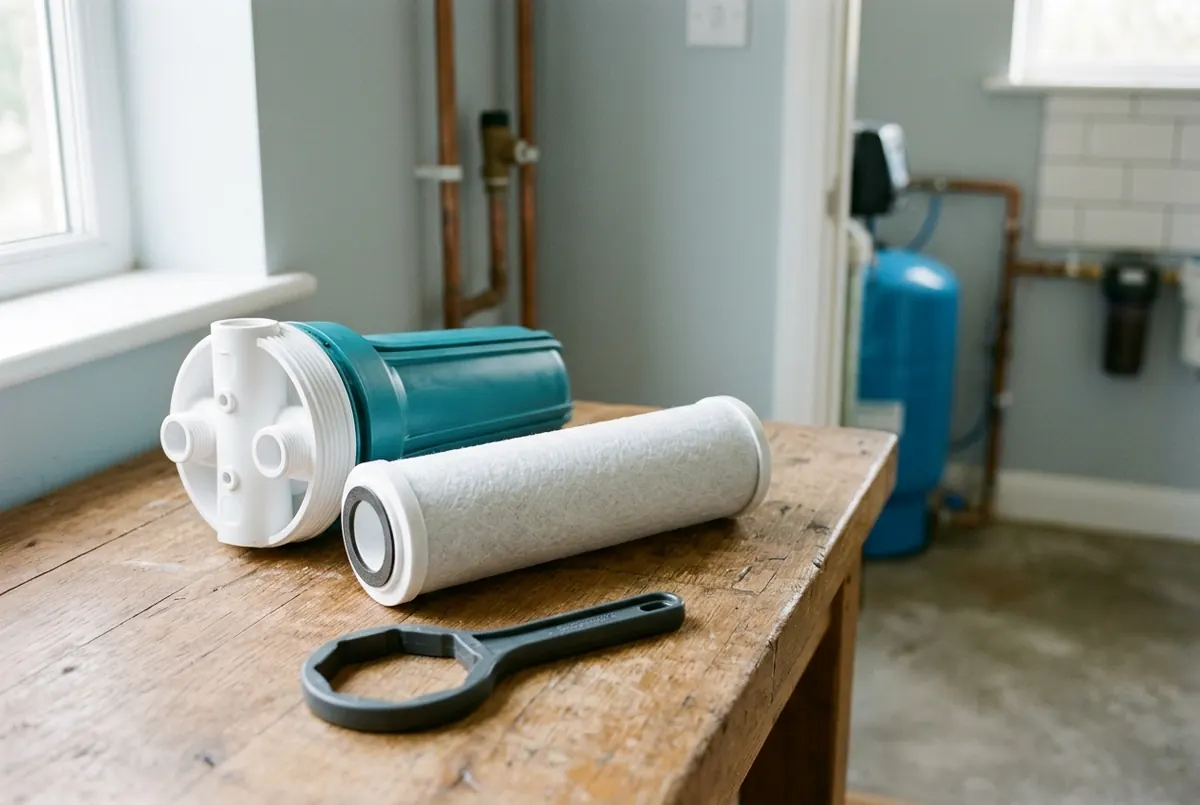
Chloramine is a much more stable molecule meaning it persists in the water better than chlorine. But this stability makes it a lot more difficult to remove from water. Knowing whether your city is using chlorine or chloramine will help you choose the correct piece of equipment to remove it.
Here's a list of the top 100 cities in the United States by population, showing whether they use chlorine or chloramine as their residual disinfectant. Below this list, we've provided more info on how to remove chlorine and chloramine from your city-provided home water.
| City | Disinfectant |
|---|---|
| Albuquerque | Chlorine |
| Anaheim | Chloramine |
| Anchorage | Chlorine |
| Arlington (TX) | Chlorine |
| Atlanta | Chlorine |
| Aurora (CO) | Chloramine |
| Aurora (IL) | Chloramine |
| Austin | Chloramine |
| Bakersfield | Chlorine |
| Baltimore | Chlorine |
| Baton Rouge | Chlorine |
| Boston | Chloramine |
| Charlotte | Chlorine |
| Chicago | Chlorine |
| Chula Vista | Chloramine |
| Cincinnati | Chloramine |
| Cleveland | Chloramine |
| Colorado Springs | Chlorine |
| Columbus | Chlorine |
| Corpus Christi | Chloramine |
| Dallas | Chloramine |
| Denver | Chloramine |
| Detroit | Chlorine |
| Durham | Chloramine |
| El Paso | Chlorine |
| Fontana | Chloramine |
| Fort Wayne | Chloramine |
| Fort Worth | Chloramine |
| Fremont | Chloramine |
| Fresno | Chlorine |
| Garland | Chloramine |
| Gilbert | Chloramine |
| Glendale (AZ) | Chloramine |
| Glendale (CA) | Chloramine |
| Greensboro | Chloramine |
| Henderson | Chloramine |
| Hialeah | Chloramine |
| Honolulu | Chlorine |
| Houston | Chloramine |
| Indianapolis | Chloramine |
| Irvine | Chloramine |
| Irvine | Chloramine |
| Irving | Chloramine |
| Jacksonville | Chlorine |
| Jersey City | Chloramine |
| Kansas City (MO) | Chloramine |
| Lakewood (NJ) | Chloramine |
| Laredo | Chloramine |
| Las Vegas | Chlorine |
| Lexington | Chloramine |
| Lincoln | Chloramine |
| Long Beach | Chloramine |
| Los Angeles | Chloramine |
| Louisville | Chloramine |
| Lubbock | Chloramine |
| Madison | Chloramine |
| Memphis | Chlorine |
| Mesa | Chlorine |
| Miami | Chloramine |
| Milwaukee | Chloramine |
| Minneapolis | Chloramine |
| Moreno Valley | Chloramine |
| Nashville | Chlorine |
| New Orleans | Chloramine |
| New York | Chlorine |
| Newark | Chloramine |
| Norfolk | Chloramine |
| North Las Vegas | Chloramine |
| Oakland | Chloramine |
| Oklahoma City | Chloramine |
| Omaha | Chloramine |
| Orlando | Chlorine |
| Philadelphia | Chloramine |
| Phoenix | Chlorine |
| Pittsburgh | Chlorine |
| Plano | Chloramine |
| Portland (OR) | Chlorine |
| Raleigh | Chloramine |
| Reno | Chloramine |
| Riverside | Chloramine |
| Rochester | Chlorine |
| Sacramento | Chlorine |
| San Antonio | Chlorine |
| San Bernardino | Chloramine |
| San Diego | Chloramine |
| San Francisco | Chloramine |
| San Jose | Chloramine |
| Santa Ana | Chloramine |
| Scottsdale | Chloramine |
| Seattle | Chlorine |
| Spokane | Chlorine |
| St. Louis | Chloramine |
| St. Paul | Chloramine |
| St. Petersburg | Chloramine |
| Stockton | Chloramine |
| Tampa | Chloramine |
| Toledo | Chlorine |
| Tucson | Chlorine |
| Tulsa | Chloramine |
| Virginia Beach | Chloramine |
| Washington DC | Chloramine |
| Wichita | Chloramine |
More about chlorine vs chloramine
The disinfection of city drinking water is a two-part process. Step one, usually called primary disinfection, is the process where a city treats the water it draws from the environment to destroy all pathogenic organisms - bacteria, cysts, viruses, etc. For the vast majority of cities in Canada, this is accomplished using free chlorine. Free chlorine is an aggressive oxidizer and essentially destroys the tissues of these organisms and kills them.
But just killing the organisms at the water extraction point isn't enough. This water now has to travel through thousands of kilometres of pipe to reach every home in the city. To ensure that the treated water isn't contaminated on its journey, the city adds a residual disinfectant that travels with the water as it's distributed.
When we talk about Chlorine vs. Chloramine we're talking about the choice of the residual disinfectant. Most cities in Canada still use chlorine as the residual, but more and more cities are making the move to Chloramine. Why?
Simply put - Chloramine persists in the water longer than Chlorine. It's a more stable molecule and won't naturally dissipate into the air or aggressively react with every compound or surface it comes into contact with. This means that chloramine added at the source is much more likely to be present at the point of use - your home. More persistence = better disinfection = safer citizens.
But the stability of chloramine also makes it a lot hard to remove from water than chlorine. Both compounds are removed well using activated carbon, but chloramine removal necessitates the use of a special type of activated carbon called catalytic carbon.
Here at Aquatell, we sell multiple different systems that can be used for the removal of chlorine and chloramine. These systems fall into two broad groups - systems that treat the water for your whole home, and those that treat the water for a single dispensing point (these are usually called point-of-use systems).
Here are links to our whole home systems:
Whole Home Chlorine Removal Filter Whole Home Chloramine Removal Filter
If you're just looking to remove chlorine or chloramine for your drinking and cooking water, we highly recommend one of our Reverse Osmosis Systems.